The short answer
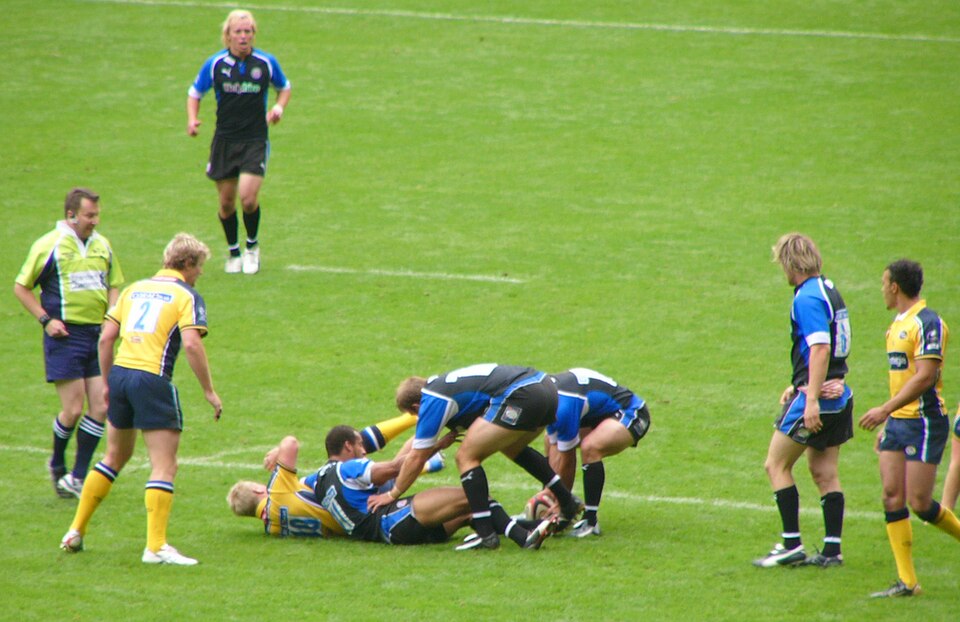
- A hip-drop tackle occurs when a ball carrier is grasped or tackled from the side or behind, the tackler swings round or through them, and drops hips or body weight onto their legs or lower limbs.
- The change was approved by World Rugby's Executive Board on 28 September 2026 and took effect on 1 November 2026.
- Sanctions depend on how much leg contact there was, with a penalty, yellow card or red card possible under the Passport guidance.
- Citing commissioners are independent officials who review foul play that may warrant a red card, usually after the match.
- Passport said further work on match-official decision-making and judicial sanctions was scheduled before 1 November 2026, and no follow-up confirming the outcome had been found as of November 21, 2026.
A hip-drop tackle is a tackle in which a ball carrier is grasped or tackled from the side or behind, the tackler swings round or through them, and the tackler drops hips or body weight onto their legs or lower limbs. World Rugby has made the hip drop an explicit offense under its laws, effective 1 November 2026. ESPN links the renewed attention to an NRL injury involving Penrith's Nathan Cleary.
Why it's trending
A World Rugby media release on 7 October 2026 confirmed the hip-drop change and a related knee-drop change, as reported by ESPN.
The Passport guidance gives 1 November 2026 as the date the change took effect, which is why readers are asking how it is enforced.
The issue came back into focus in Australia after ESPN reported that Penrith's Nathan Cleary was brought down in a hip drop during an NRL preliminary final loss to Newcastle in 2026. The exact match date is not confirmed in the sources reviewed.
ESPN also reports that rugby had been criticised for not acting sooner.
What is a hip-drop tackle?
The three conditions in the new definition
The ball carrier must be grasped or tackled from the side or from behind. The tackler must swing round or through them. The tackler must then drop hips or body weight onto the legs or lower limbs as they are brought to ground.
The knee-drop tackle, covered separately
The knee drop is a different technique, in which a player drops to one or both knees before tackling. World Rugby says it is already covered by law and can also draw a penalty.
How are tackle bans decided?
The Shape of the Game meeting and the working group
World Rugby said the hip-drop study grew out of the February 2026 Shape of the Game meeting. A tackle height working group was set up.
Research and evidence
The working group commissioned research with Leeds Beckett University covering both sevens and fifteens. In the World Rugby release, Chair Brett Robinson said the evidence showed hip drops, though rare, could cause significant leg injuries, and that knee drops were on the rise.
The description of hip drops as rare is World Rugby's own wording, and ESPN's headline places it in quotation marks.
The Executive Board vote and the law amendment
The Tackle Working Group noted that hip drops have been banned in American football and rugby league, and recommended an explicit ban in rugby union. The Executive Board approved this on 28 September 2026. Law 9.13 was amended to list hip drops as dangerous tackling, alongside head contact and high tackles in open play.
The list in Law 9.13 is not exhaustive. The law wording says 'not limited to', so other actions can also count as dangerous tackling.
According to the World Rugby release, Rob Kearney, the IRPA representative on the Executive Board and a former Ireland player, acknowledged that the change would be hard to manage in the short term as players, coaches and match officials adjust.
What sanction does a hip drop get?
The World Rugby release says a hip drop will be sanctioned with at least a penalty kick. The Passport guidance for officials sets out three levels, including one with no offense. The sources reviewed do not settle which approach applies in each case:
| Level | Situation | Outcome |
|---|---|---|
| 1 | Grasp, slide or hold, with no swing and no drop onto the legs | Not an offense, play on |
| 2 | Swing-through with minimal leg contact | Penalty |
| 3 | Swing-through with more than minimal leg contact | Yellow or red card |
Factors for level 3 include control, diving or both feet off the ground, hips dropping onto a ball carrier moving at speed, and the significance of the landing on the limb.
Premeditated or intentional foul play is treated as the most serious category and draws a red card. The Passport guidance says that red card is permanent in elite rugby.
How does the citing process work?
Who can be a citing commissioner
A citing commissioner is an independent official appointed by the competition organiser, the host union or World Rugby. Their job is citing players for foul play that warrants a red card.
Triggers: match officials, team referrals, footage requests
Commissioners can cite offenses spotted by match officials, even where the referee has already acted. Teams can refer incidents to the commissioner within the competition's time frames. The commissioner can request extra broadcaster or team footage, interview the victim and witnesses, and obtain medical reports.
The clear-and-obvious threshold and the 12-to-48-hour window
As a rule, a commissioner should back the on-field decision and act only where the case is clear and obvious from post-match evidence. They can also issue a Citing Commissioner Warning.
A player already sent off generally cannot be cited, unless the dismissal came from two yellow cards. Players on a temporary yellow-card suspension can still be cited, according to the Passport role description.
A citing complaint is usually sent in writing to the host union or tournament organiser's nominated officer. The usual window is a minimum of 12 hours and a maximum of 48 hours after the match, and an extension can be granted in exceptional cases. The 12-to-48-hour figure is the general rule in the Passport guidance, and competitions or unions can set different limits.
From citation to judicial hearing
A cited player usually goes to a judicial hearing, where they answer the citation and may argue for no further sanction or for dismissal. The hearing format depends on the game, tournament or union rules, and the commissioner may be called to clarify the citation.
What happens next
The Passport page said further work on match official decision-making and judicial sanctions was scheduled before 1 November 2026. As of November 21, 2026, no published follow-up confirming the outcome had been found in the sources reviewed, so enforcement is not confirmed.
Readers can check the World Rugby release and the Passport law change page for the official wording. Because unions, leagues and competitions may set their own enforcement, check the rules of the specific competition before drawing conclusions.
Questions people ask
What is a hip-drop tackle under World Rugby's rules?
World Rugby defines a hip-drop tackle as one where a ball carrier is grasped or tackled from the side or behind, the tackler swings round or through them, and drops hips or body weight onto their legs or lower limbs as they are brought down. The change was approved on 28 September 2026 and took effect on 1 November 2026. A grasp or hold without a swing or drop is not an offense under the Passport guidance.
How is the sanction for a hip drop decided?
The Passport guidance sets three levels: no offense, a penalty for swing-through with minimal leg contact, and a yellow or red card for more than minimal leg contact. World Rugby's release says a hip drop will be sanctioned with at least a penalty kick, and the sources reviewed do not settle which approach applies in each case. Premeditated or intentional foul play draws a red card, which the Passport guidance says is permanent in elite rugby.
How does the citing process work in rugby?
A citing commissioner, appointed by the competition organiser, host union or World Rugby, reviews foul play that warrants a red card, and a complaint is usually sent in writing within 12 to 48 hours after the match. That 12-to-48-hour figure is the general Passport rule, and competitions or unions can set different limits. A cited player then usually goes to a judicial hearing.
Is the hip-drop ban fully enforced yet?
As of November 21, 2026, the ban has been in force for about three weeks. The Passport page said further work on match official decision-making and judicial sanctions was scheduled before 1 November 2026. No published follow-up confirming the final enforcement details was found in the sources reviewed.
Sources
- World Rugby clarifies law on dangerous tackles — World Rugbyworld.rugby
- 2026-11 Law change - Hip drop tackles — World Rugby Passportpassport.world.rugby
- Role Description — World Rugby Passportpassport.world.rugby
- World Rugby finally moves on 'rare' hip-drop tackles — ESPNespn.com